Friday, September 11, 2015

WEEK 3: YOU ARE MY SUNSHINE

Louisiana Gov. Jimmie Davis


The song for this week--You Are My Sunshine. Listen to the version on S&P download--by Jimmy Davis, former governor of Louisiana, with a prior music career  (you can look into this).

https://berkeley.box.com/s/8yvg04lwanoqngvxkh1n4hn1aepn3ikb

Jimmy Davis sang the song on the campaign trail all over Louisiana in the year 1940. It soon became popular all over the country--and during the war. Bob Dylan at one point said that it was our best song... Why do you think this might be so?

Jimmy Davis
where from
when recorded
the history
precedents (listen to Heavenly Sunshine, see below)

black southern traditions
white southern traditions
their interweaving
learn by finding recordings as specific examples (by date)  

Look into precedents: Laura Henton's Heavenly Sunshine, a gospel song.
Laura Henton- Heavenly Sunshine - YouTube
You can hear  something of Will the Circle be Unbroken in the melody--but also the dynamics of You Are My Sunshine. (It's on youtube--and you can find this on the American Song Archive, under the Resources post on class blog.) Look for other earlier songs that may have influenced Jimmy Davis--that songs that formed his world. And check Smithsonian Global Sound to see what Folkways Records recorded.

Also listen to Ollie Gilbert's "down home" version, on Max Hunter Archive (also on Resources post). What's the difference between Ollie's version and Jimmy Davis? Why? How will this influence your new project?  You Are My Sunshine - Max Hunter Folk Song Collection - Missouri State University

You Are My Sunshine is not precisely about place. Or is it? Where does it take you, place-wise?

NOTE: Your thoughts about the ideas above--how you explore them, what you find, what sense you make of them--should be reflected on your blog sites!


Ollie Gilbert


Reading: Lomax selections in Reader, pps. 1-32. Read for tone as well as content. Look into the Lomax story (John Lomax and his son, Alan--both important--crucial--figures in American folk music.) Alan Lomax collection was published in 1960. John and Alan Lomax collection in 1947. See bibliography (on blog) for full details. As you read, or re-read, ASK THREE QUESTIONS re Lomax--post on your blog, with the beginnings of some answers...

Other versions (from YouTube). This is just a smattering of what's out there. I've followed the 50-year rule, of course--which I want you to do as well:

YOU ARE MY SUNSHINE, BY GOV. JIMMIE DAVIS - YouTube
▶ You Are My Sunshine by Gov Jimmie Davis, Scott Innes & Nelson Blanchard - LMHOF 2012 - YouTube 
▶ Gene Autry: You Are My Sunshine - YouTube

You Are My Sunshine by Mississippi John Hurt - YouTube
John Hurt's versions are a delight. We'll spend more time with all of his music later in the semester!

For a very different take, see Jerry Lee Lewis' original version for Sun Records--its own kind of raunchy classic... Jerry Lee Lewis - You Are My Sunshine - YouTube

Wednesday, September 9, 2015

Students' Online Notebooks - LINKS


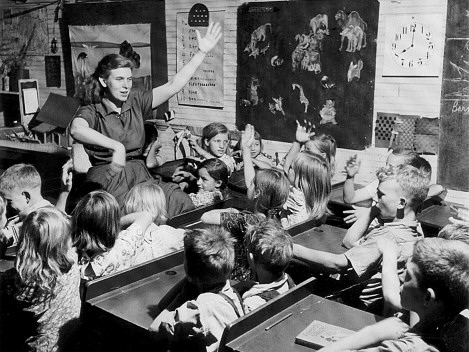
Jean Ritchie teaching one-room school, Cumberland, Kentucky, WWII era


Megan Ky-Lan Bradley     http://megankbradley.blogspot.com/
Kim Becerril                       http://kimbecerril.blogspot.com
Lida Asselstine Tunesi       http://tunesandplaces.blogspot.com/
Hannah Danielle Laher      http://hlaher.weebly.com
Austin Reuter                     http://austinreuter.weebly.com/
Miin Choi                           http://seeing-songs.blogspot.com   
Ashley Ding                       http://asherding.blogspot.com/
Sky Whities                       http://mylifeisasky.blogspot.com/
Laila Audelo                      lailaaudelo.blogspot.com
Oguz Gencay                     http://snapshotsofvs185x.blogspot.com/ 
Cindy Gao Zhang               http://cinzheng.blogspot.com/
Carlos IƱigo                        http://vs185xcarlos.blogspot.com
Chris Detjen                        http://songsplaceschris.blogspot.com/
Thomas Agramonte            http://thomasagramonte.blogspot.com
Kiare Tanner                       kdiorable.blogspot.com
Danica Adams                    lifeharmonies.blogspot.com
Gabrielle Nguyen               http://gabienguyen.blogspot.com/

Saturday, September 5, 2015

American Song & Smithsonian‏ Archives

Folkways Records, album cover, 1962


After handling the media the way I did during class last week (I do like real-time explorations, but my presentation wasn't at all smooth) I went through the American Song and Smithsonian Global Sound Archives again and selected a few good examples for you. Many of the archive audio examples also come up on you tube. The two resources work together.

Down in the Valley

From Lonesome Valley, a Moe Asch collection, Folkways 1951
http://search.alexanderstreet.com/glmu/view/work/226939
female singer, chorus mixed, nice banjo tremolo
Bess Lomax, Pete Seeger and Tom Glazer

Gene Autry
http://search.alexanderstreet.com/amso/view/work/1406690
Hollywood Cowboy original

Bob Ross:
http://search.alexanderstreet.com/amso/view/work/227685
a version for servicemen during WWII

Frank Proffitt:
http://search.alexanderstreet.com/amso/view/work/227854
banjo version here, true Southern Mountain tradition
Kingston Trio borrowed Tom Doolah from Frank Proffitt...

and on the DRAM Archive:
Birmingham Jail, from 1931 ( Cal Carson [pseudonym of Frank Luther],
http://www.dramonline.org/tracks/birmingham-jail/player
Quite interesting because it takes a traditional song into new Jazz-Age arrangement

Connemara Cradle Song - Down in the Valley


Tommy Makem, Irish Folk Musician, Poet, Storyteller


Tommy Makem version of the Connemara Cradle Song, an old Irish lullaby, which points to an Irish  precedent for Down in the Valley...


https://www.youtube.com/watch?v=cHGJu8oWkkE

Birmingham Jail--Mudcat Thread on Darby & Tarlton version

Tom Darby & Jimmie Tarlton, 1920's


 Darby & Tarlton-Birmingham Jail - YouTube  1927
 _____

A post from Mudcat /Digital Tradition on Birmingham Jail: 

Subject: Lyr Add: BIRMINGHAM JAIL (from Darby & Tarlton)
From: Dale Rose
Date: 15 Jan 00 - 05:23 PM

Here are the notes (by Ed Kahn) and lyrics for Birmingham Jail from Darby & Tarlton, Complete Recordings, Bear Family 15764, 1995 ~~ three-CD set. While I don't think they settle the matter of authorship, they do make for interesting reading. They also give insight as to how the recording artists were treated by the companies, and how really "rich" they became as a result of their recordings.

I also think this is one of the best of the old time reissues, with every surviving recording by Tom Darby and Jimmie Tarlton, both together and separately. Highly recommended.


This is a traditional lyric that has been collected throughout the South from Missouri, Kentucky, and Arkansas before Tom and Jimmie ever committed it to wax. But the popularity of their recording was so great that in subsequent years their version turned up with increasing frequency. The problem of traditional material finding its way onto wax and the ensuing copyright problems are illustrated clearly in the details of this song's history.

Tom insists that he wrote the song, although folksong scholarship traces this song back long before Darby & Tarlton. Tom remembers: "I sung Birmingham Jail in World War I and there's some buddies that's living yet that know that I did." Despite exaggerated claims, their recording of this song sold about 200,000 copies, which brought them a total of $37.50, which they split. Shortly before the beginning of the Second World War, Tom visited Lennie Davis, a young attorney in Columbus and claimed that he owned Birmingham Jail, and that his copyright had been violated. Tom had copyrighted the song in his name on June 11, 1930. Columbia replied to Davis' inquiry that this song was a folksong in the public domain and produced a copy of the original contract with Darby & Tarlton in which they promised to sing only folk songs and furthermore agreed that if they did use any original material the rights would go to Columbia.

Davis advised Tom that he should try to break the original contract, contending that, in his opinion, this was a yellow dog contract and that such contracts were illegal. Before Davis was able to proceed, he entered the army. He turned the file over to Tom with the advice to find another attorney. Tom turned the matter over to a collection agency that he read about in an ad in the back of a magazine. Tom says he eventually made some kind of settlement with Columbia, but the details are not known.

What is interesting is that both Tom and Jimmie claim the song. In 1937, Jimmie appeared at a reunion of ex-inmates of the Birmingham Jail and sang 'his' song. The event was covered in the old 'Birmingham Post.' What is interesting is that Jimmie contended that in 1925 he was serving an 85-day sentence for moonshining and that at that time his girlfriend, Bessie, was sick and he wanted to be by her side. The story is that he sang his sad song about Bessie and the prison guards told the warden, who went to the City Fathers who pardoned him. The story goes on to say that Bessie died shortly after Jimmie was released from Birmingham Jail.

What we know is that this is, indeed, a traditional song and that it is possible that either or both men put their personal stamp on it.

BIRMINGHAM JAIL
As sung by Darby & Tarlton, November 10, 1927
Authorship claimed by both, but mostly traditional

Down in the levee, levee so low
Late in the evenin' hear the train blow
Here the train blow love, hear the train blow
Late in the evenin' hear the train blow

Roses love sunshine, violets love dew
Angels in heaven know I love you
Write me a letter, send it by mail
Send it in care of Birmingham Jail
Birmingham Jail love, Birmingham Jail
Send it in care of Birmingham Jail

Bessie my darling, Bessie my dear
Bessie I love you, foolish I do
Down in the meadow, down on my knees
Prayin' to heaven to give my heart ease
Bird in a cage love, bird is so low
Kiss me once more love, then I must go


http://mudcat.org/thread.cfm?threadid=17109#163367

Friday, September 4, 2015

Resources-- Notes on Use


Alan Jabbour and Carl Fleischhauer record Burl Hammons in West Virginia in 1973.


Notes on RESOURCES

This is a good place to begin to explore some of the course RESOURCES (you'll find all the links together in a post in the Blog Archive, column to right). There are many many different versions of the songs recorded--and the "stream" of these versions constitutes a history in its own right.

Primary are the UC Berkeley Music Library's Streaming Audio and Video Collections--look into these two in particular:

* American Song                                                          
http://search.alexanderstreet.com/amso

* Smithsonian Global Sound                                        
http://search.alexanderstreet.com/glmu

For this week, use "Down in the Valley" and "Birmingham Jail" as search terms. There's some overlap in the archives--and each collection has a different emphasis. That means a lot of thinking  and sorting on your part. No, I don't expect you to listen to everything, but rather to get a good sense of what's there--and to begin to learn to follow you own path. To be discriminating...

Also remember to check the Max Hunter collection for his "front porch" recordings, made on the road in the Ozarks (Arkansas) between 1956-76. Ollie Gilbert remains a favorite.  

* Max Hunter Folk Song Collection

YOU TUBE and the 50 YEAR RULE. There are unlimited number of versions of everything on You Tube, but finding the right version (is there such a thing?) is an increasing challenge. The 50-year-rule can help. Gets you to earlier material. Use google searches to find out about the selections. You need to be creative in your "research" of these songs--who sang them--and why.  I expect you to be articulate and specific about the songs--the versions, background. Ask in class--we'll discuss. For older material, the fact that the visual image is in bl;ack and white can be a tip off. And you can't always trust the publication date--when new collections are made, they have date of publication, not the date of original recording--which one can usually find on google with some poking around.

MUDCAT. Remember that the discussion threads in Mudcat are often a very good resource for how people interested in American Roots Music interpret it collectively. Takes some patience to go through, but what you'll find here can be illuminating. We discussed in class the obscure words in the lyrics for I Ride An Old Paint--muleskinner and cowhand terms from more than a century ago... Fiery and Snuffy... throw the hoolihan... You'll find this discussed on Mudcat.

*  Digital Tradition (Mudcat)

HOW MUCH SHOULD YOU KNOW? The S&P course isn't about the minutiae of dates and titles--however, the fabric of what we're listening to--and singing--has a specific historical character. Which I expect you to know in its main outlines. I'll ask questions in class to see if you're following through. (Remember, the key word on your part is initiative!)

Sample question: What is Elizabeth Cotten's most loved song--how old was she when she wrote it--and what historical associations does it evoke? Or, to turn the question around, Who wrote "Freight Train when she was eleven years old--and what's its historical background (traeted in an eliptical fashion). Also, why did she stop playing music for all those years?

Include your own discussion of what you find on your personal notebook (blog) site...

Thursday, September 3, 2015

WEEK 2: DOWN IN THE VALLEY


Walker Evans, Hitchhikers, Vicksburg (vicinity), March 1936


DOWNLOADS. Continue listening to the first three downloads (all the songs in tan songbook and gray songbook). Pick out songs that you'd to do together in class. And sing them so that hyou learn the lyrics...

READING. Start with both the Lomax selections in Reader, pps 1-32. I want you to consider "voice"--who's speaking and why--and (most importantly) how. Don 't be put off by the language from the time when these pieces were written. And don't dismiss it! It tells us a LOT about where the sings come from--that is, how we have them now... The first, Alan Lomax's 1960 book introduction will give you good overview of the "folksong" world as he saw it at the outset of the 1960s folk revival--to which the Lomax's work made an important contribution. (Remember, Alan Lomax and his father, John Lomax made those early field recordings of the songs--that's how we have Leadbelly and many others...)

ONLINE NOTEBOOKS. Several of you have not yet sent me your blog url--active link to your homepage. Get it to me this week without fail. Everyone should post their first project (FIRST SONG) with your own discussion of how you got there. The work in class in many cases was quite good--likewise our group discussion, which should give you some ideas on how to write about your work...

PROJECT.  Down in the Valley, one of the most mysterious of our songs--even though it seems quite straightforward. The verses you have were "assembled" by John and Alan Lomax. Another version of the song goes by the title Birmingham Jail. The Lomax version is a combination of the two.


Make a visual response to the song. Personal component and cultural stream component, as discussed in class. Some of both? Medium is open, but see if you can get at the expressive qualities of the song--the space, the time, the feelings involved...

Let your hand show...


The Cumberland Gap


____

The following is a quick sampler to get you started. I expect you to follow your own path using the RESOURCES archives which we got a start with in class.

Darby & Tarlton-Birmingham Jail - YouTube  1927
Burl Ives - 08 - Down in the Valley - YouTube   
The classic folkways master... also an actor--something we should discuss. 1958?
Andy Griffith - Down In The Valley - YouTube  
1950s American tv. Consider... You Angelinos, see also Gene Autry recorded on Okeh...

And here are two Max Hunter Archive recordings (Ollie Gilbert apparently did not record this song):
http://maxhunter.missouristate.edu/songinformation.aspx?ID=264  
Rev. Harold Hunter and Max Hunter, Max Hunter Folk Song Collection
http://maxhunter.missouristate.edu/songinformation.aspx?ID=489  
Jimmy Morris, Max Hunter Folk Song Collection

And then, from a different perspective entirely...

Down in the Valley, the Ikettes version:  
https://www.youtube.com/watch?v=5JK1BaPUT44
That's Tina Turner when she was still with Ike. Ask me for stories on this.

Solomon Burke - Down In The Valley - YouTube 1965
The song returned to it's souce--by the EMPEROR... Solomon Burke passed away two years ago--and a lot of his material is no longer up on YouTube. Nevertheless, his version of the song is really worth paying attention--how he re-incorporated Down In the Valley into his own soul-singer world. He also tells a powerful story about  performing the song in Louisiana at what  turned out to be a Ku Klux Klan event. (Last thing Solomon Burke expected--he told his band--"No matter what happens, just keep on playin'...") Look into this to see another aspect of American social history--a difficult one--and its connection to the music...  Otis Redding does a similar version... And you have the Ikettes, above (Tina Turner). And Leadbelly, of couse, late 1940s.

American Song and Smithsonian Archives. I made a separate most for the Archive material. Following.